July 18th
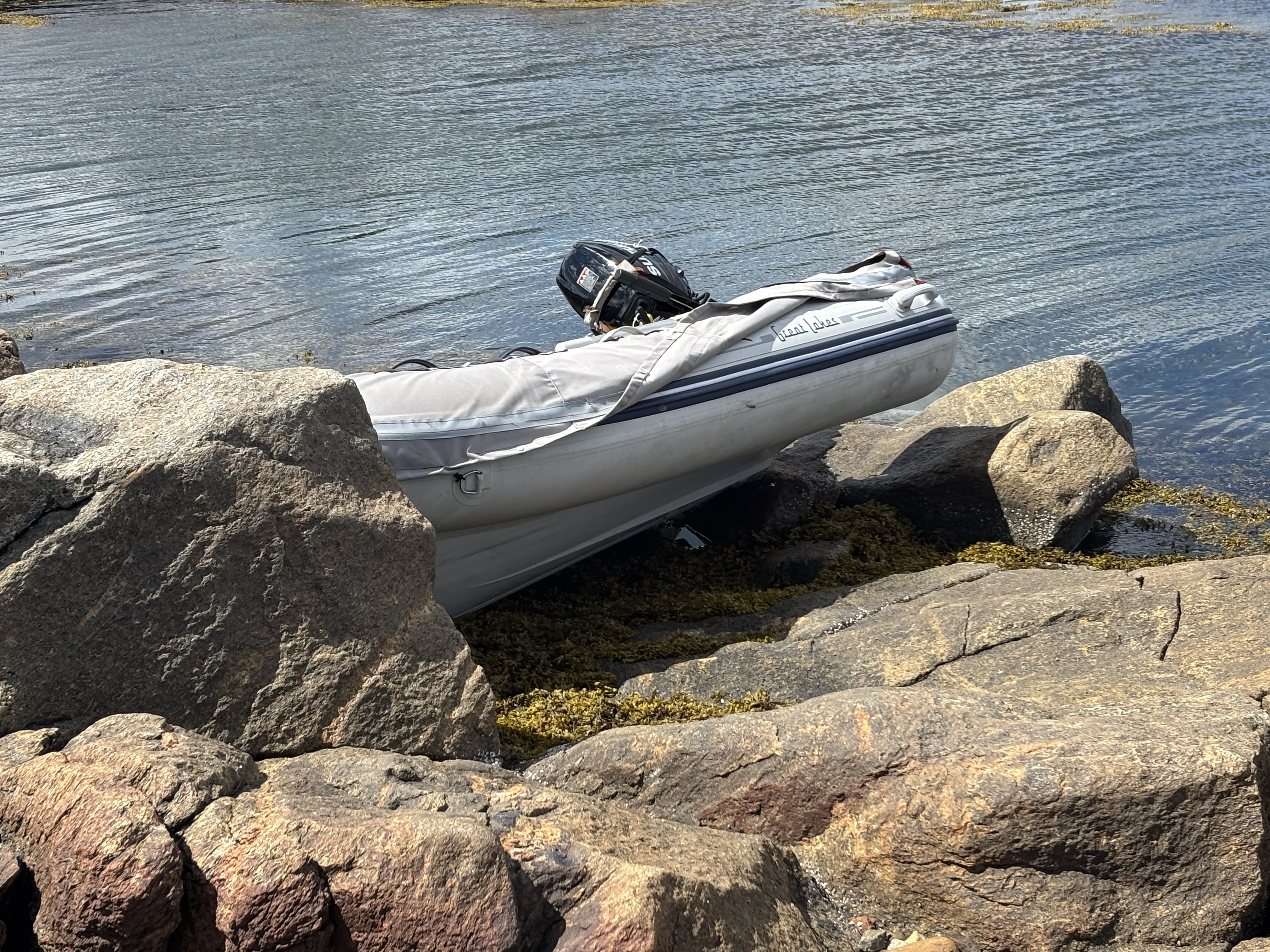
Despite the winds howling around us, our little corner of Shoal Bay offered us a comfortable night and we woke to calmer winds and sunny skies. We launched the dinghy, explored the bay, and found a great place to land the dinghy, tie up and hike the hills. Having moved further north, there is no “tree line” so the shore is not blocked by tight forest. We just needed to remember what phase of the tide cycle we were in!
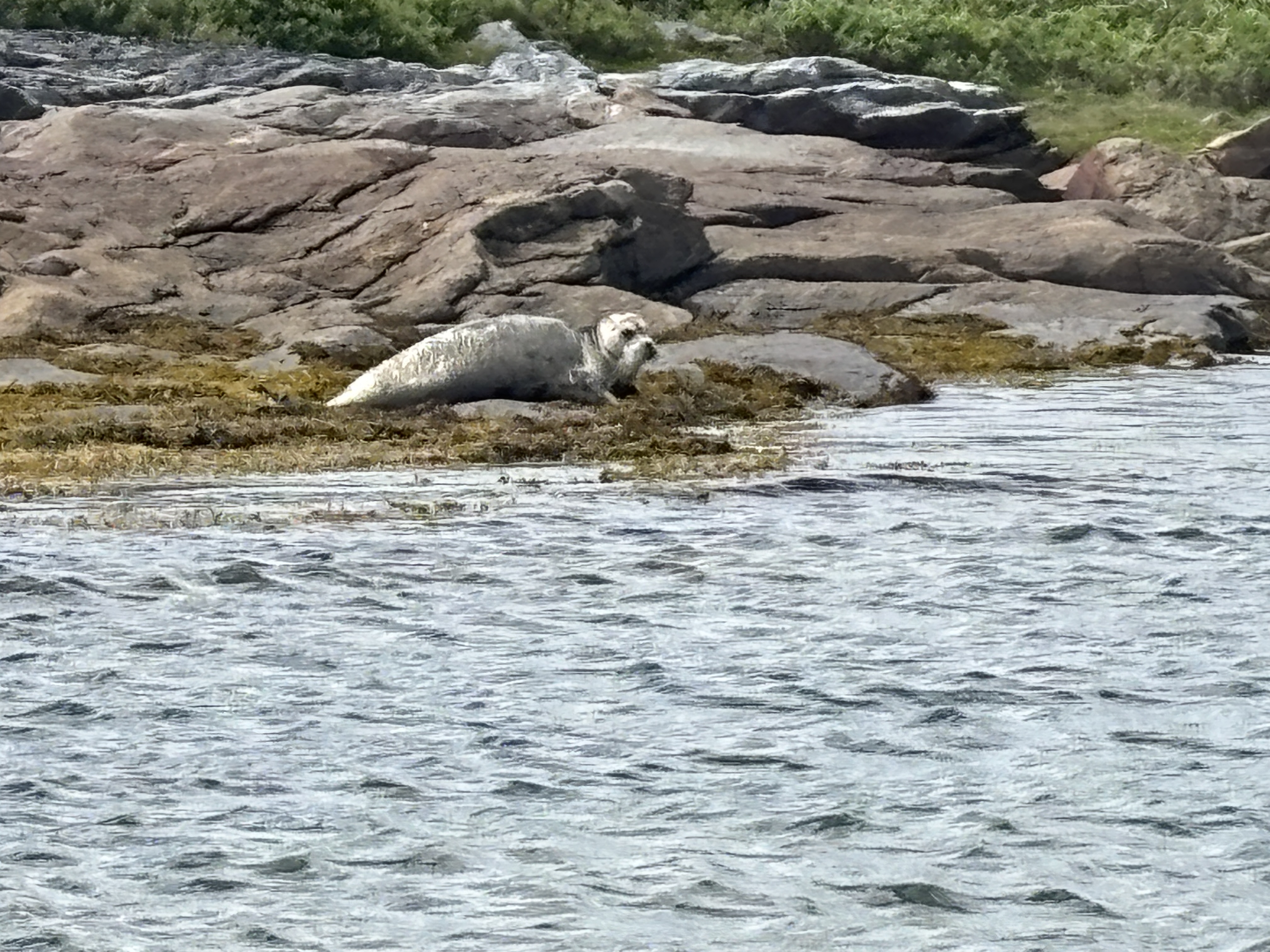
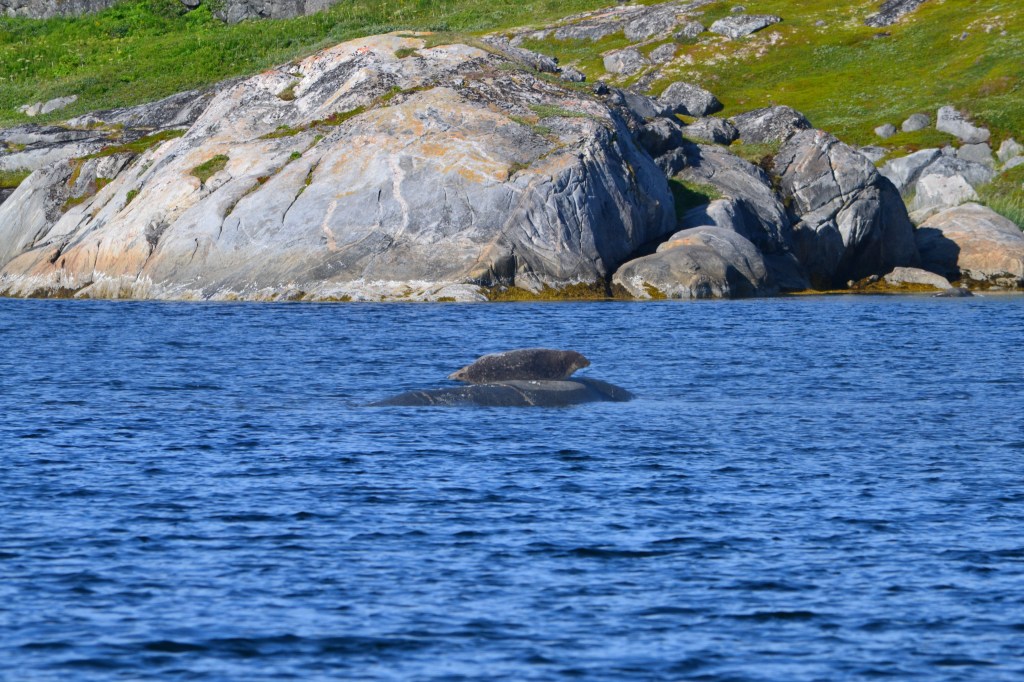
The wind kept the bugs at bay, and we had great views of the tundra and out to the open water. Got the drone flying but discovered its top speed the hard way as it struggled to fly upwind to the landing spot! Hence the drone footage was 7 minutes as Steve forgot to pause as he wrestled it back – we have shared the best 2 minutes! Back at the dinghy there was a single harbor seal sunning on the rocks 25 feet away.
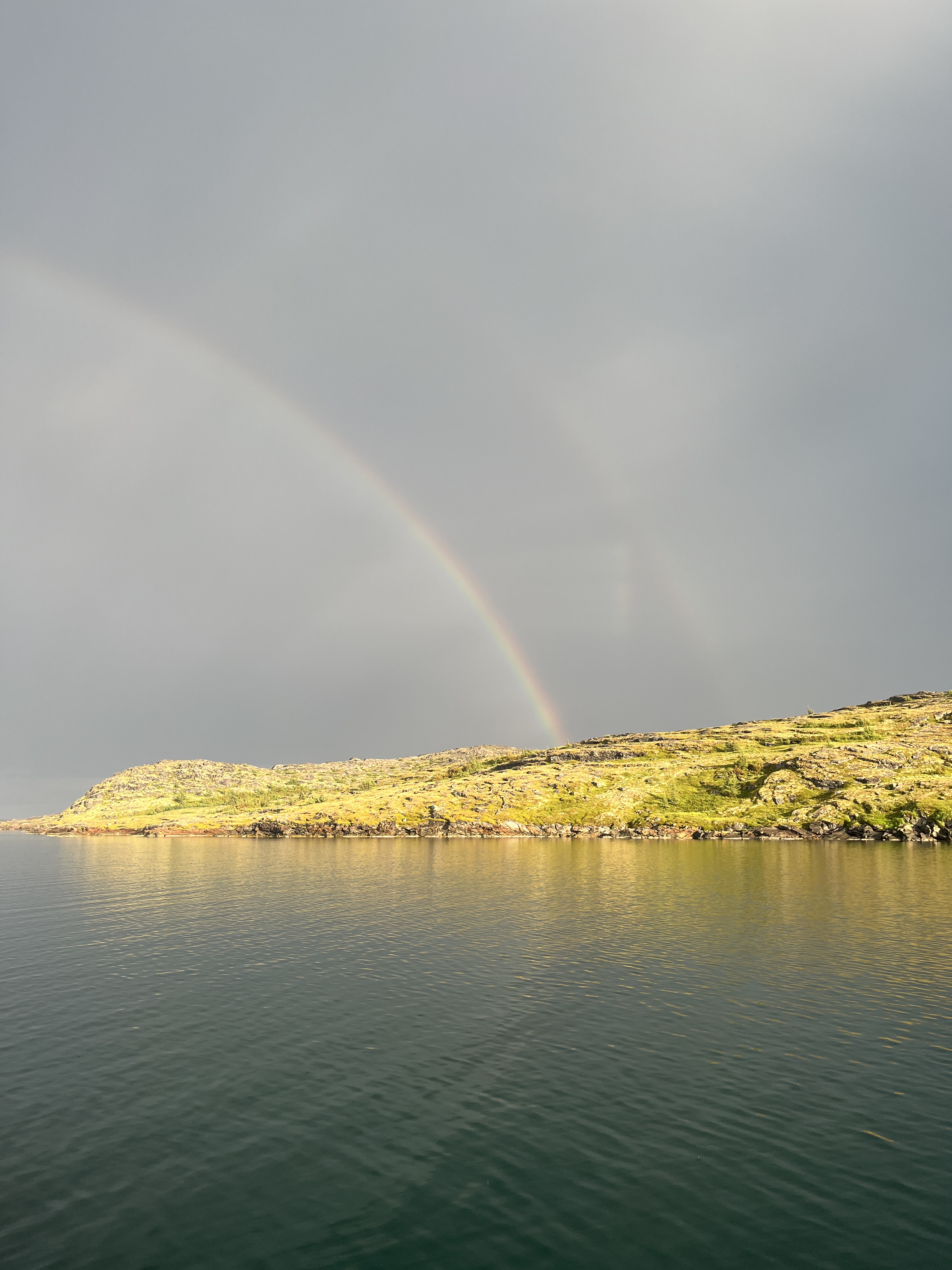
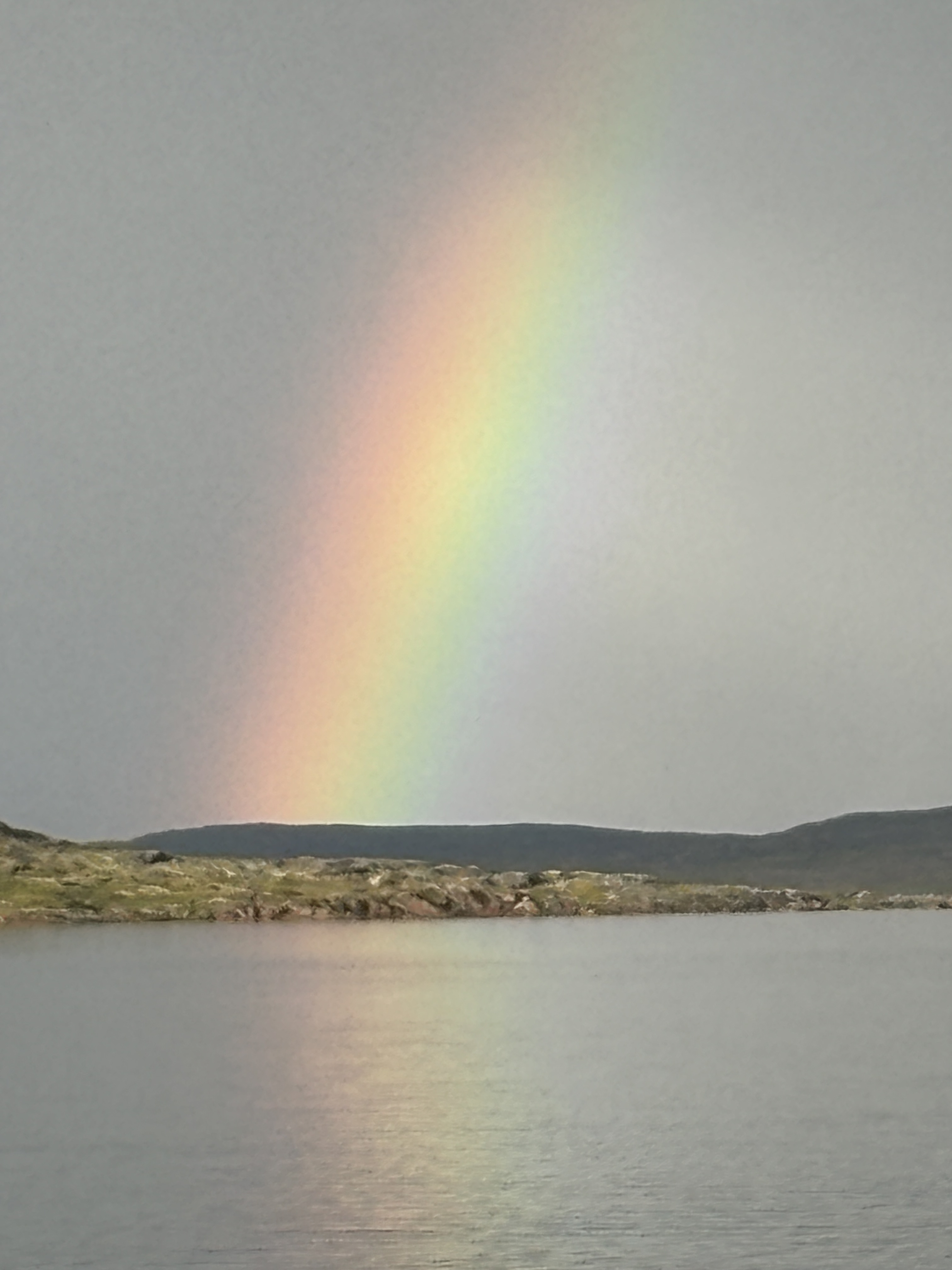
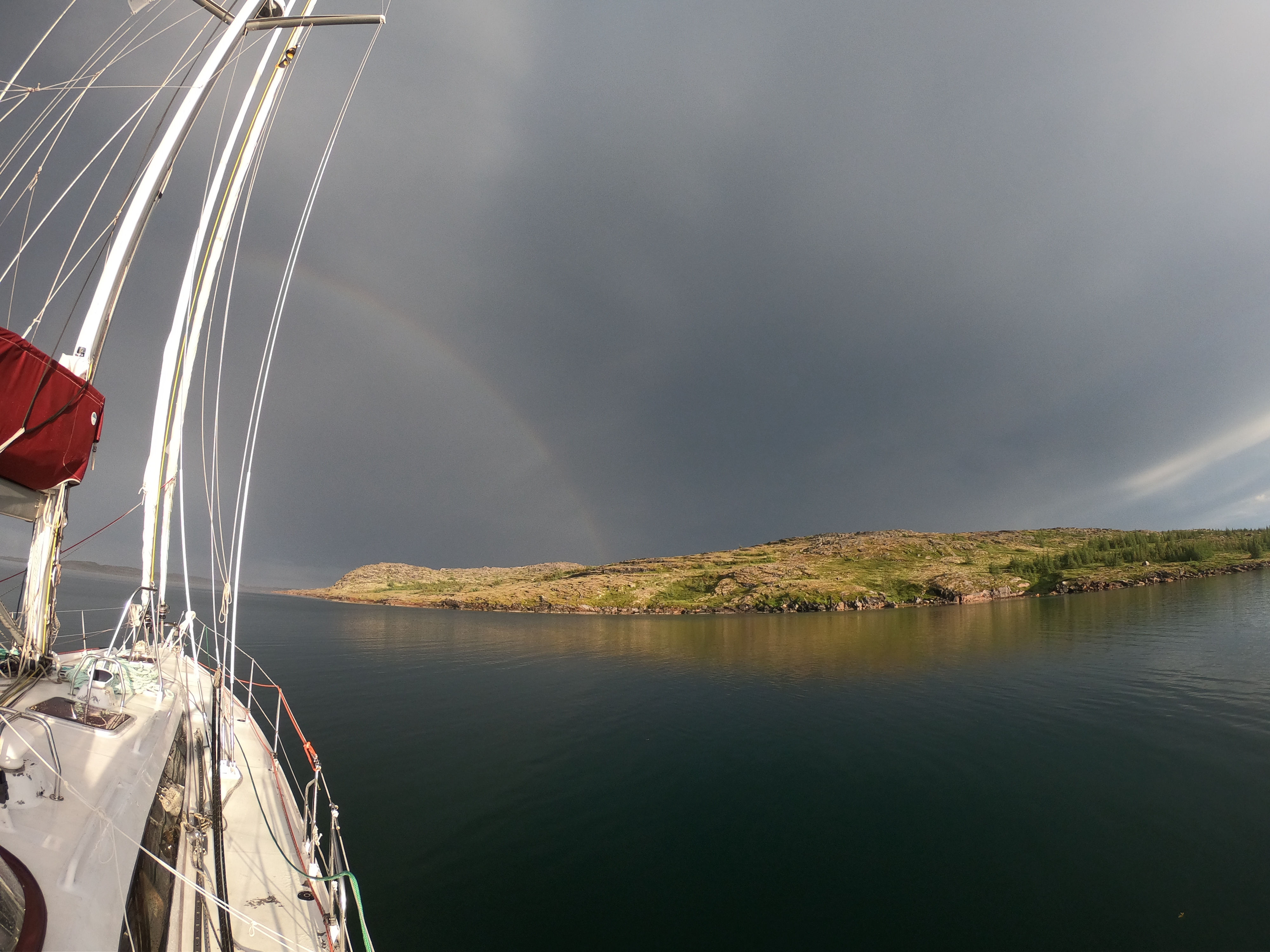
True to Labrador weather, the midafternoon gale came in, the skies clouded over an we got our first full blown thunder/lightning storm. Fork lightening and rain pounding down and Tikaani straining on her anchor. Thankfully it did not last long and ended with a gorgeous rainbow and sunset.
July 19th
We left Shoal Bay shortly after dawn to head north for Indian Tickle, where we planned to ride out the next round of winds forecast to come in in 2 days. With sun shining and a light breeze we motored through the inside passage. We appreciated the warmer temperature in the inner passage (+10 to 15C), and avoiding the open water swells. There was a shortcut through a very shallow passage (map suggested 2m) but our depth indicator said 4m and we had timed it with a rising tide. Indian Tickle by noon to avoid the afternoon Sou-westers. There is a small community of summer residents and 6 beautiful cottages. It looked like a small channel on the map but everything here looks small on the map but is huge in reality. We went to the north cove to shelter from the coming SSW winds but it was very narrow with rocky shores and many submerged rocks. The CCA guide indicated it was viable but after twice failing to get the anchor to hold we abandoned the cove and used the bow thruster to spin and exit, avoiding the rocks.
It was still early in the day, so we headed west to other coves along the north shore of the mainland but few looked really attractive and we are guessing at the mud/sand/rock bottom for good holding. We dropped anchor in a large bay in 4m, sandy bottom with lots of swing room, but we were far from shore with the SSW swells building. We just sat down with lunch to decide what to do when Darryl and his family motored over from their cottage at Indian Tickle to say hello, offer us some arctic char and advise us not to stay there as the swells would be very uncomfortable. He advised going to Grady Island, 15 nm north.
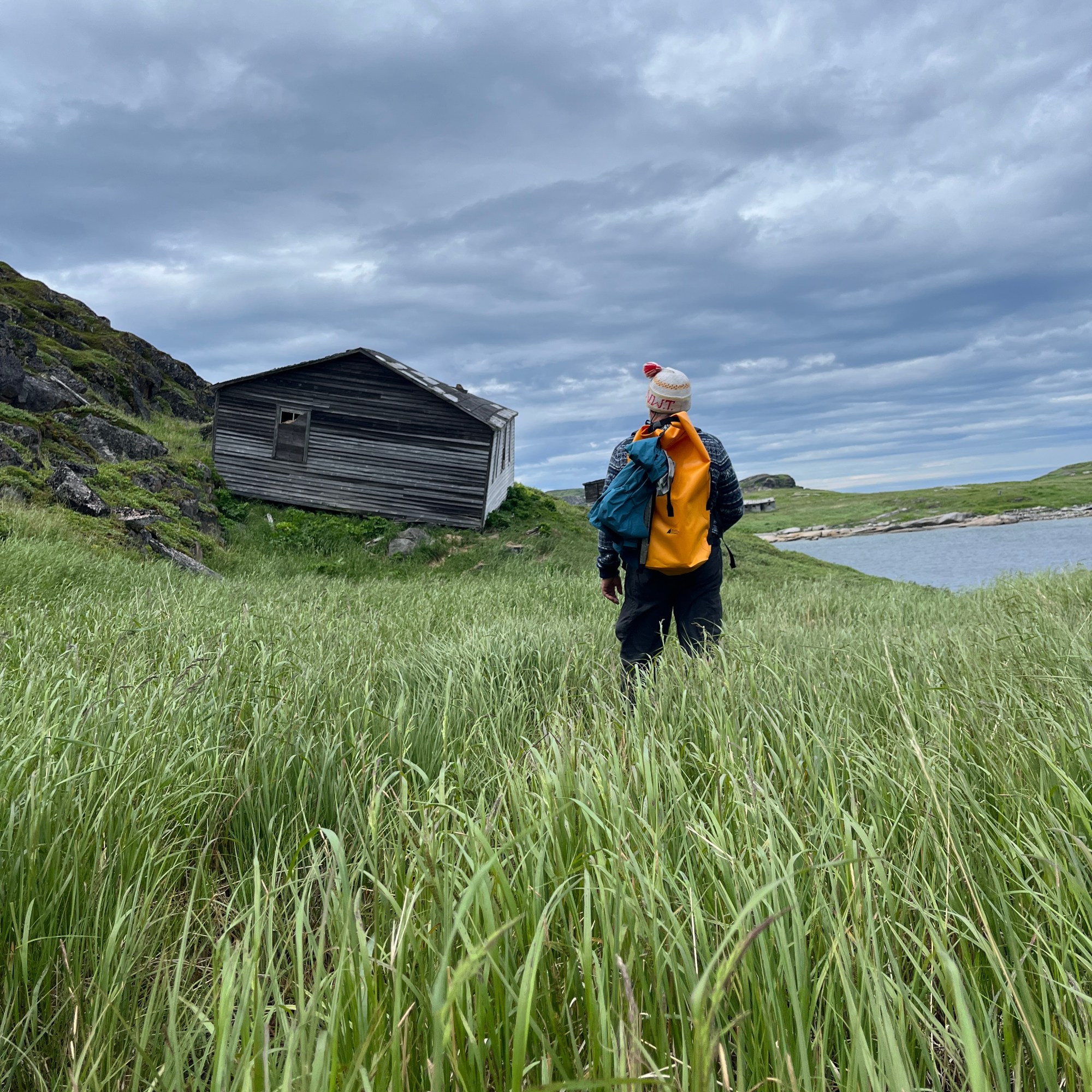
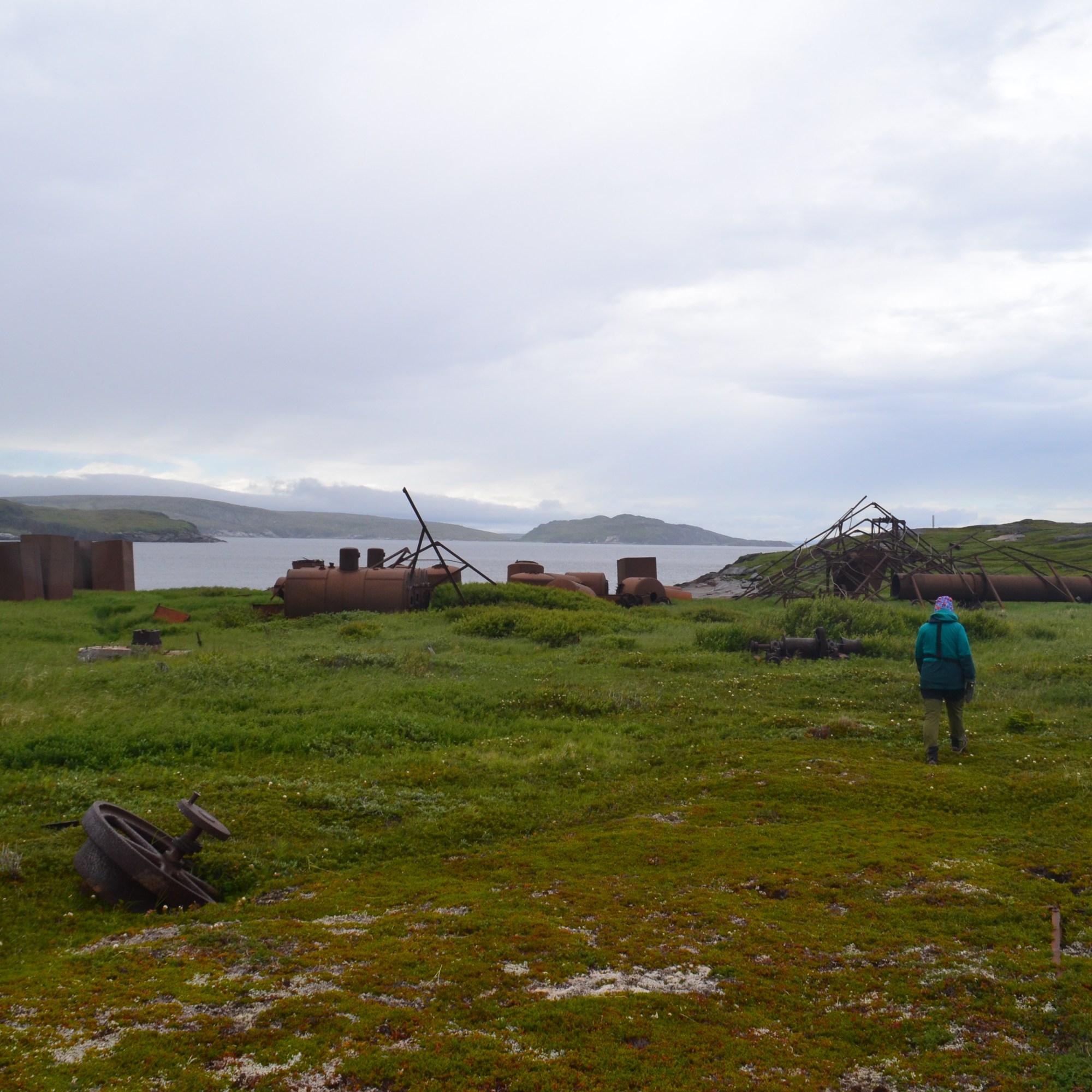
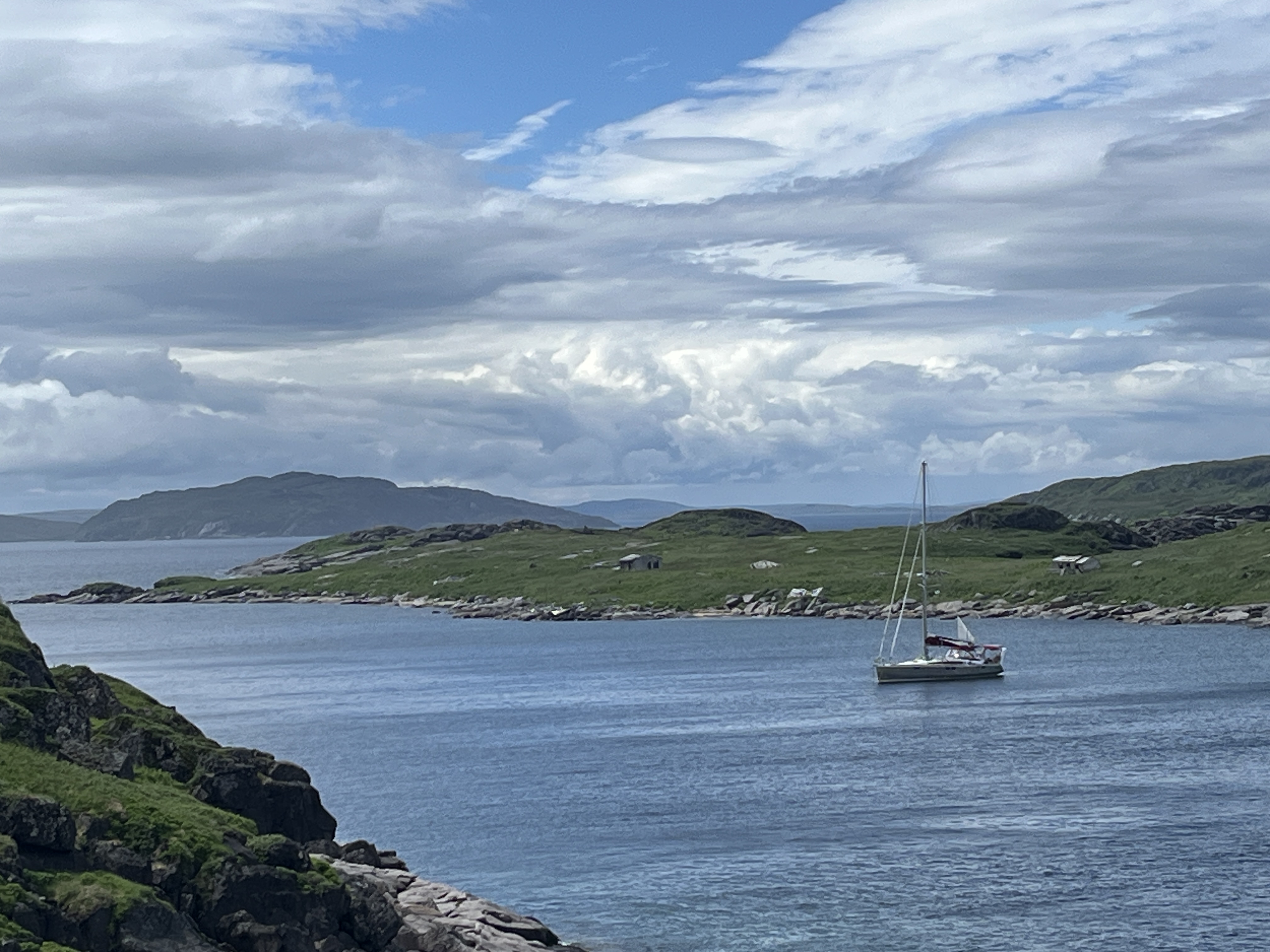
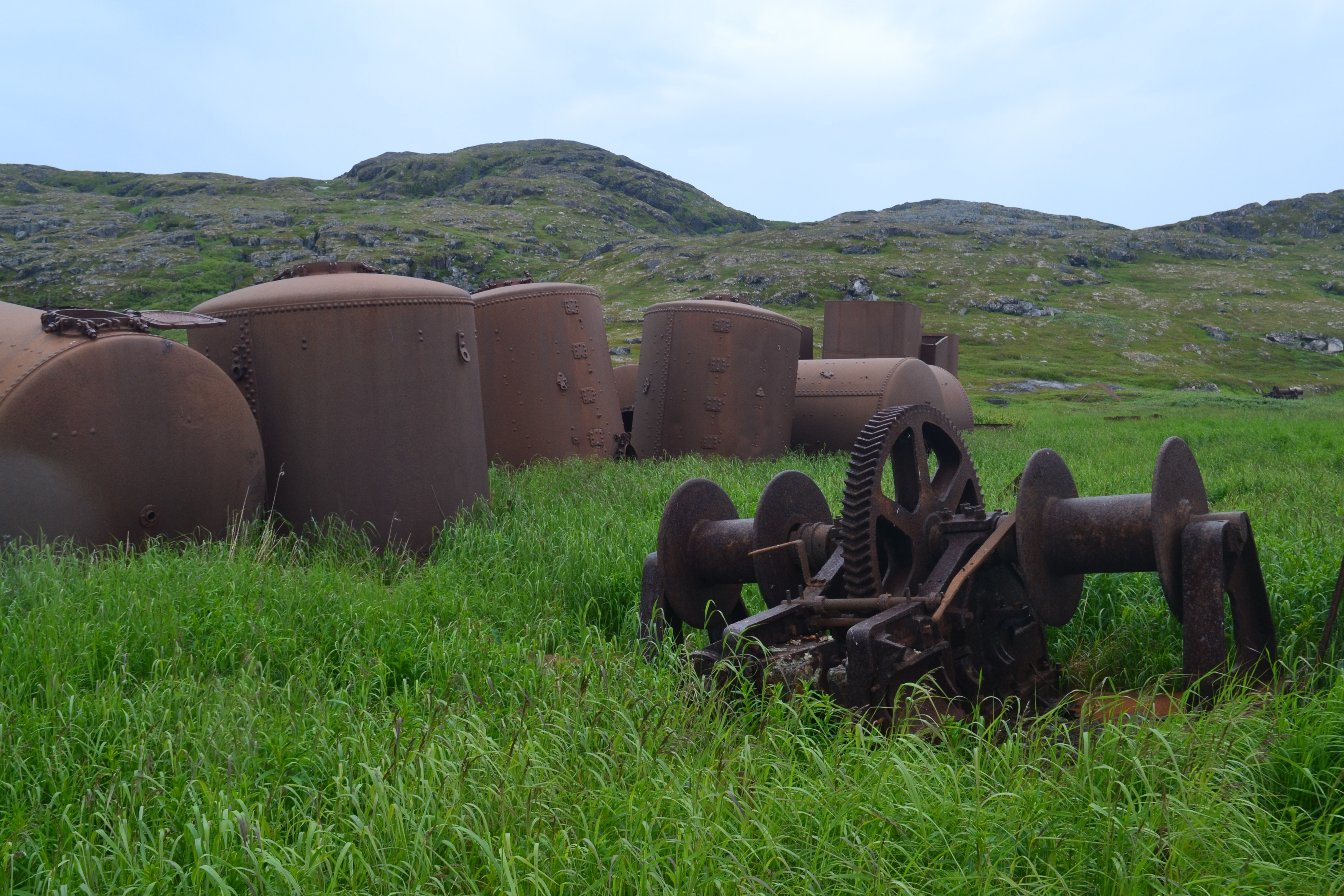
Grady Harbour is a narrow ‘tickle’ (~200m wide), with an abandoned whaling station and buildings. On approach we were greeted by a Fin Whale and seals. Monitoring the B&G we made our way around the shoals to drop anchor in the centre in 9m with 40m chain. We settled in but were not happy being so close to the rocky shore so moved 100m north, dropped, waited…called up the latest forecast and decided we needed more distance from the lee shore and moved again. We sighted 3 caribou and one swimming the channel to Little Grady Is.
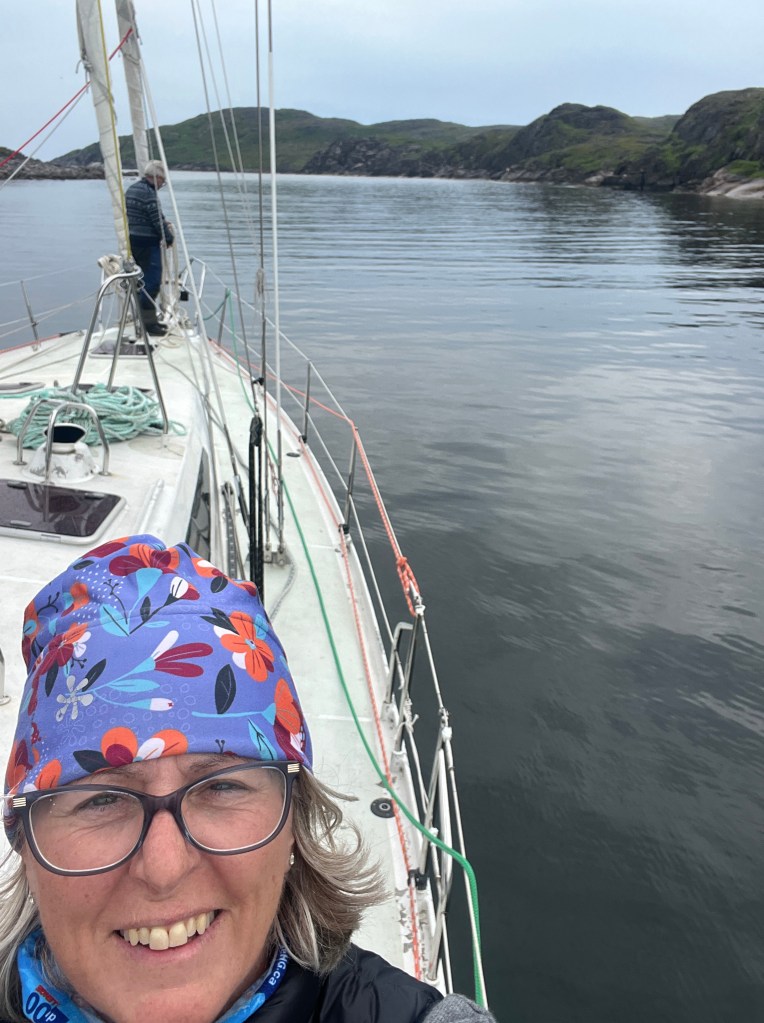
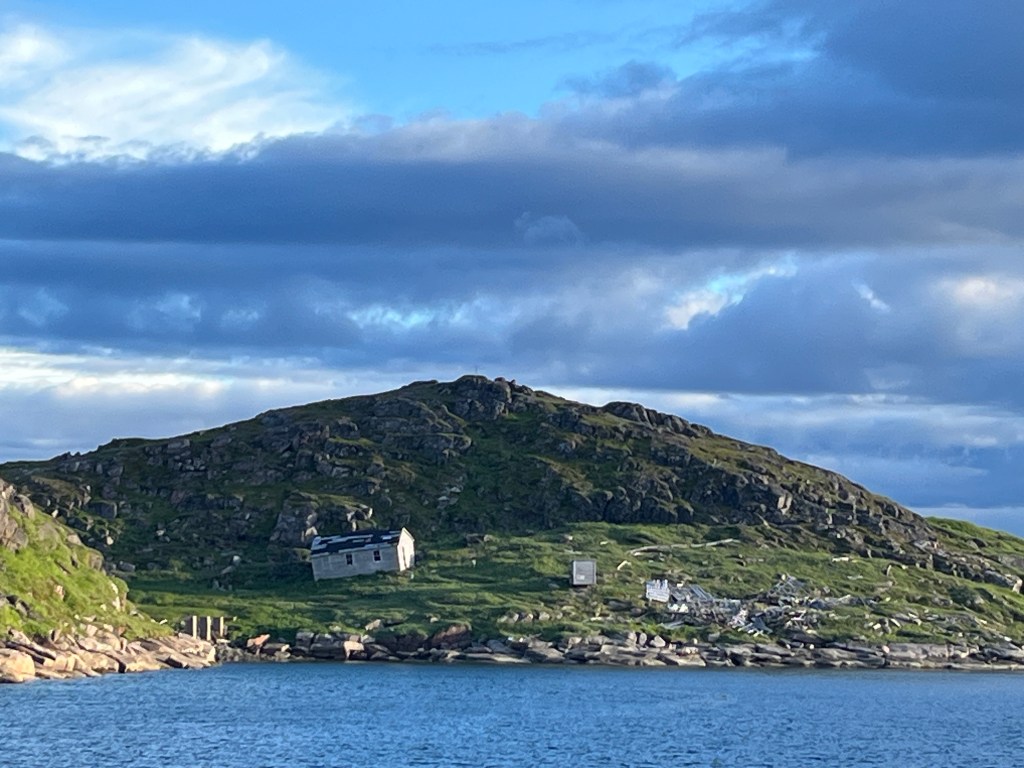
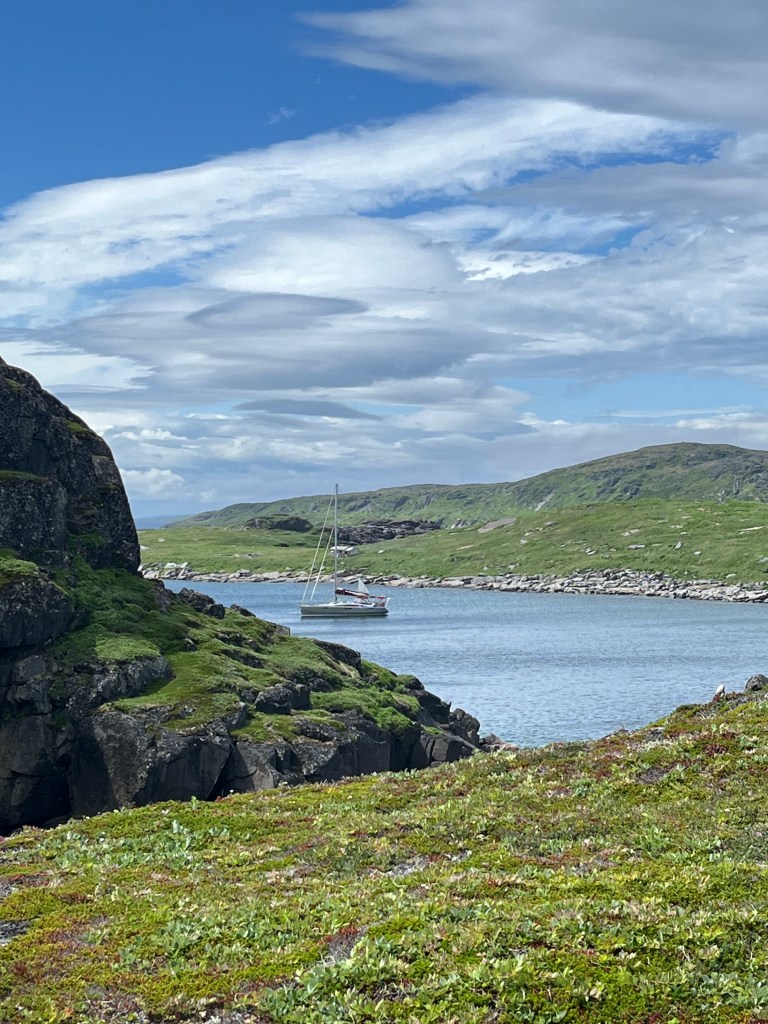
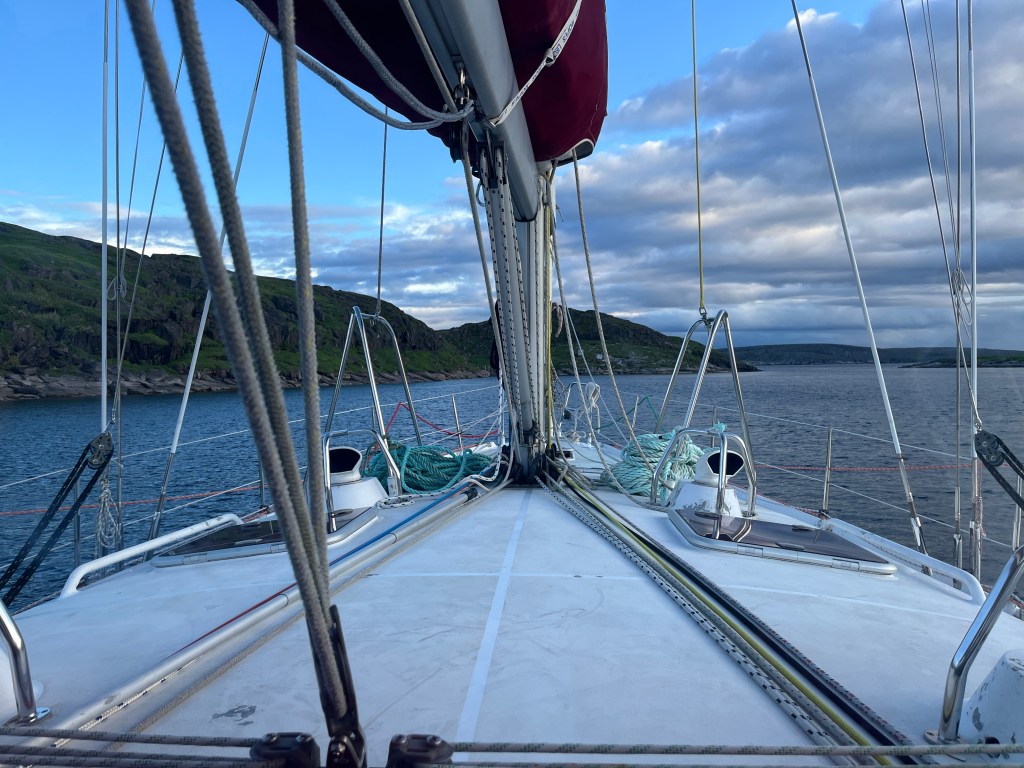
Great decision because the gale force winds came in that night and despite being in the lee of the big island we found ourselves perpendicular to the channel and straining and bouncing on the anchor. It was a noisy, worrisome night…a fitful sleep but a midnight anchor check showed us holding well.
July 20th
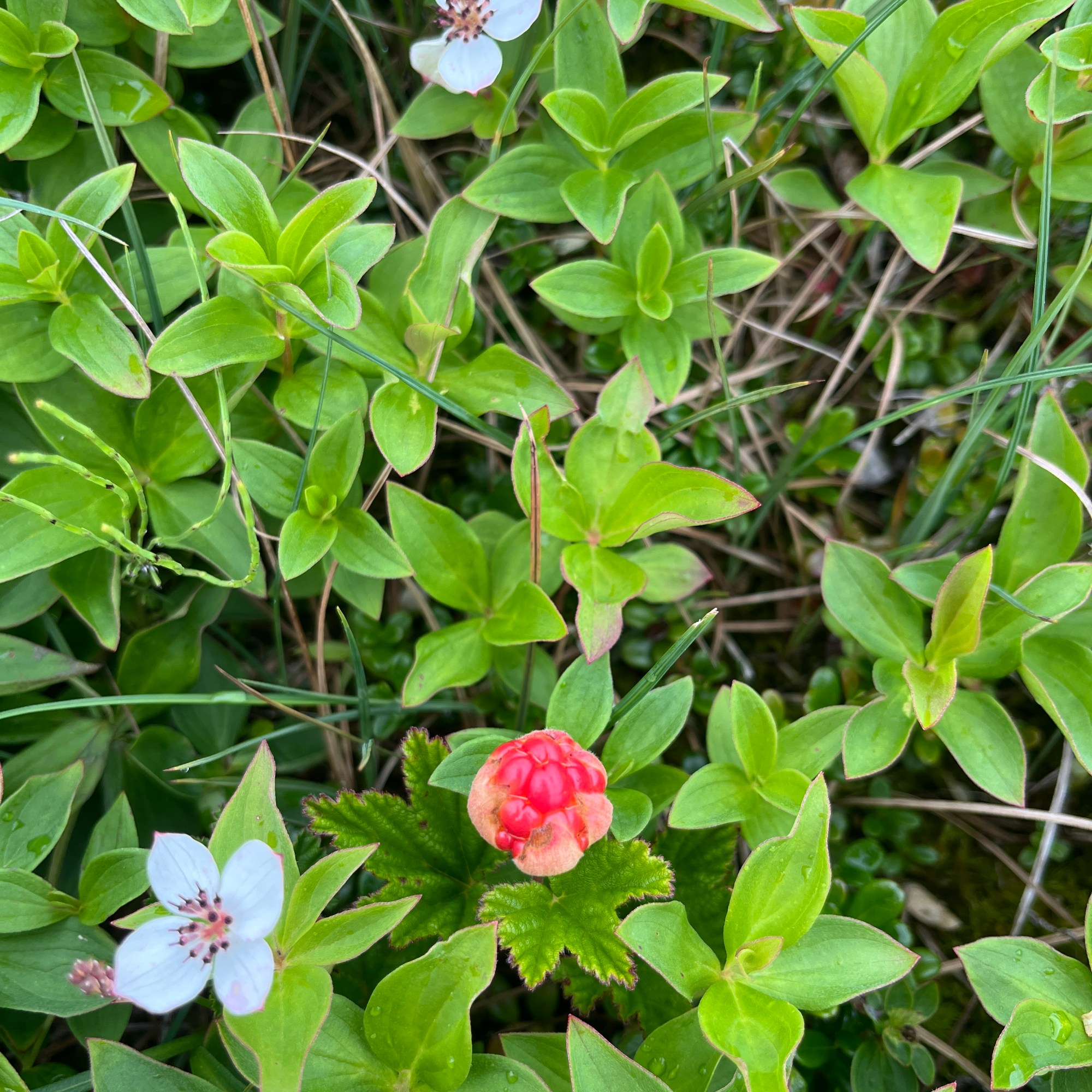
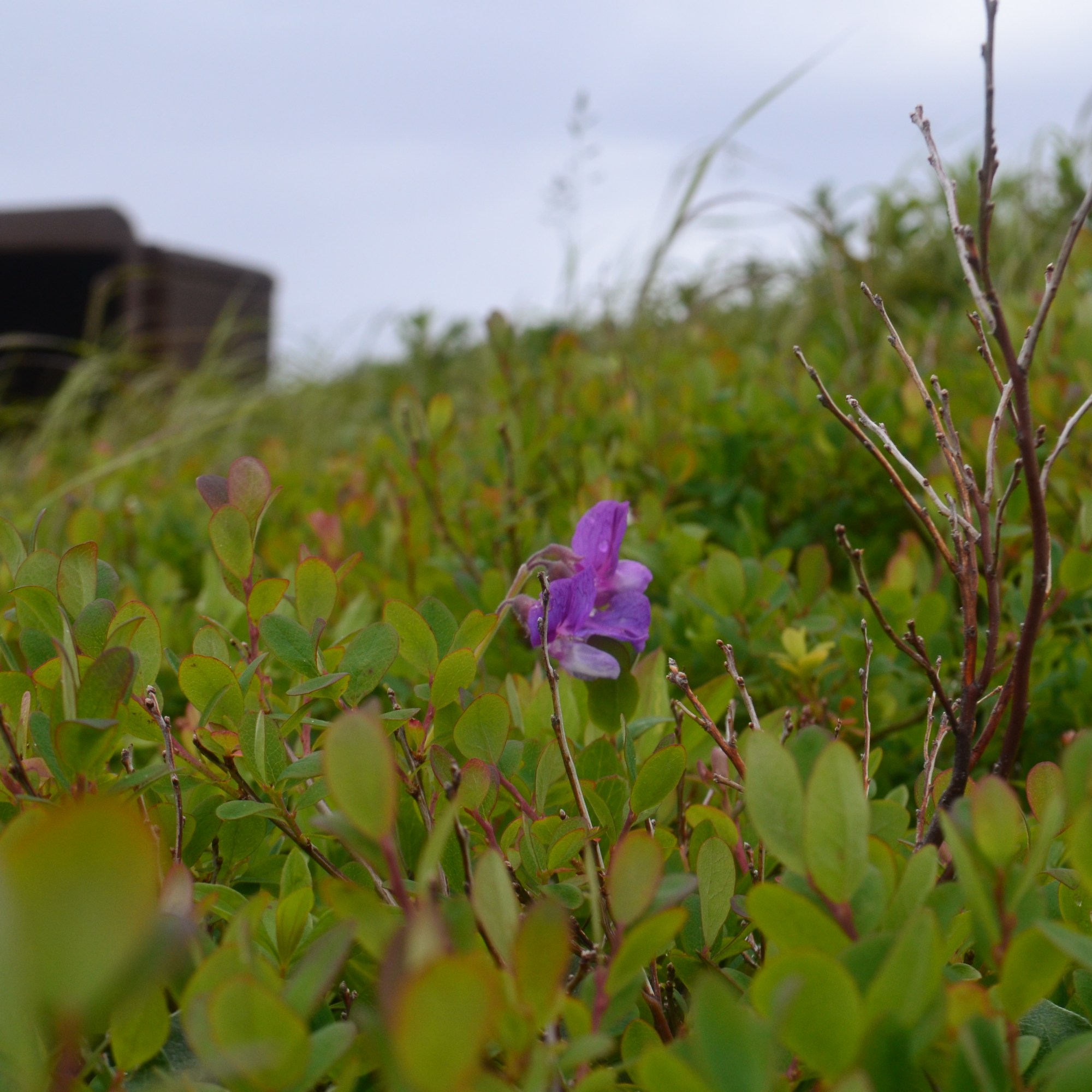
Needless to say, we slept in and waited for the winds to abate enough for us to go ashore. It is rugged and beautiful and the history is inspiring. There is a valley with a large freshwater pond, sandy beach and Cloud Berries all over the place (not yet ripe). We hiked through/despite weather (!) as it can rain while sunny here! The clouds move fast and one minute you are being pelted with rain and the next you have the sun to warm you. The flora is fascinating– mini rhododendron bushes, mini sweet pea flower, iris, blankets of moss, etc.
July 21th
There is another blow expected Thursday (what is going on!) so we need good shelter. There were a few options and Ali didn’t want another night like the 18th so we elected to go to Cartwright… a town at the end of the Labrador road. Assuming we could find a spot on one of the wharves, do laundry, find out where the bilge water was coming from, provision and be attached to something solid for the next blow. We motored in howling winds to find the municipal dock full of fishing boats but the dock at the fish plant was empty. It was shallow, so keel went up and we maneuvered in with the wind pushing us into the wharf. The fish plant was in operation, processing crab, so we shifted the boat forward on the wharf, to leave space for the crab boats to come in and unload (which 3 did). As it turned out, we were not the only ones electing to hide out. Even the crab boats that came in told us that they were sheltering in the harbour until it blew over.
July 20-23rd
It’s warm and sunny! Aside from being tied up to something solid, Cartwright also offered us a welcome break to dry the boat out. As best we can tell, most of the water in the bilge is from condensation – with the water temperature in the low single digits you can watch the droplets of condensation form. We took the boat apart and left the bilges open, aired the cushions/mattresses as best we could. Cartwright population is ~400, it has a pub (!), a 4 room hotel, 2 stores and gas station. We bumped into Daryl again and he offered his help fill up our 6 diesel containers and drive them back to the boat. Dinner at the Northside Pub was the turkey dinner special – not a meal one can make on a boat – thank you Melody!
Another day of odd boat tasks and walks, and for dinner we bought some fresh (cooked as well) crab from the fish plant. After shelling the crab and getting crab juice all over ourselves and the cockpit, we made the crab cakes NYT recipe.
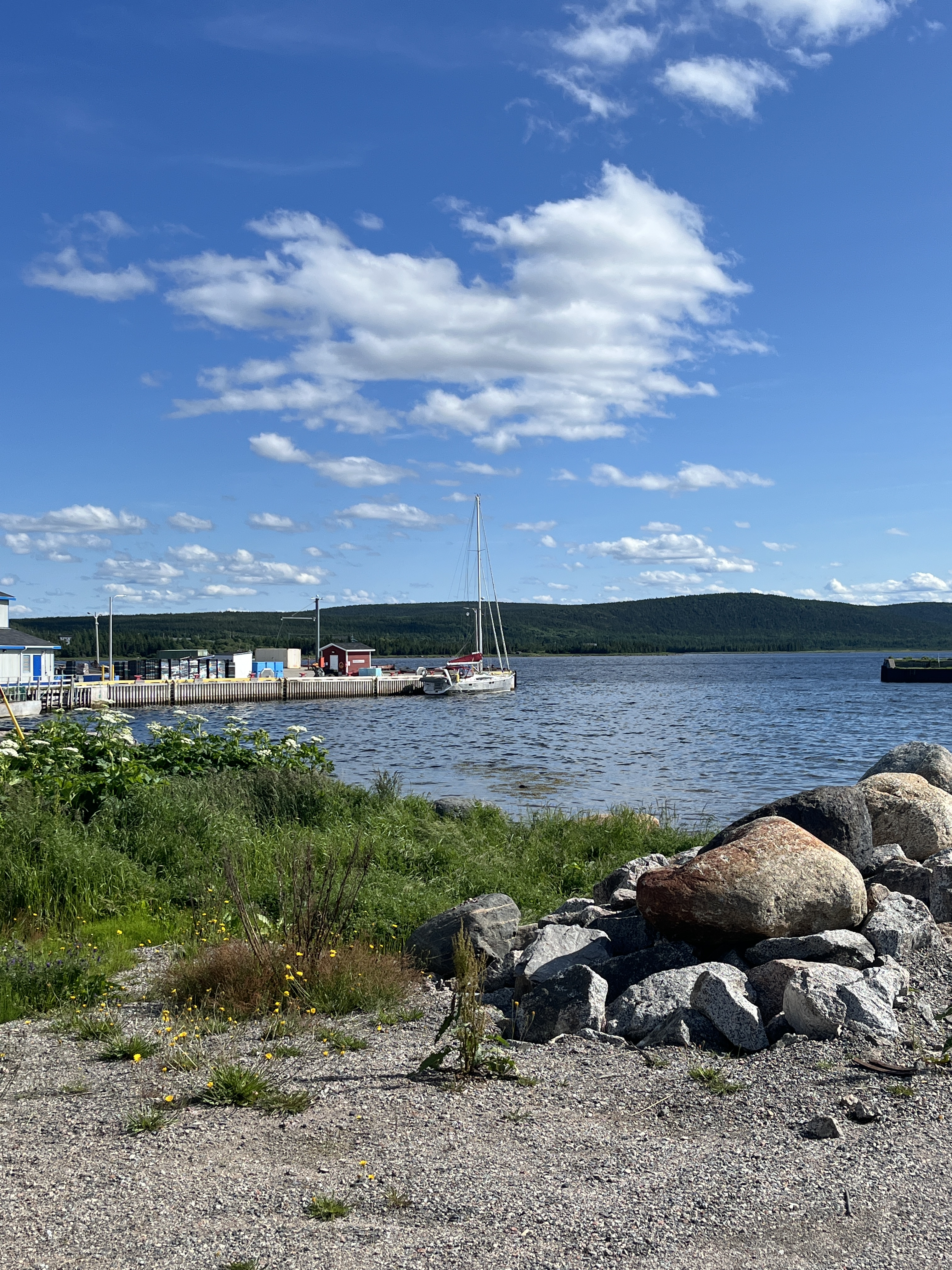
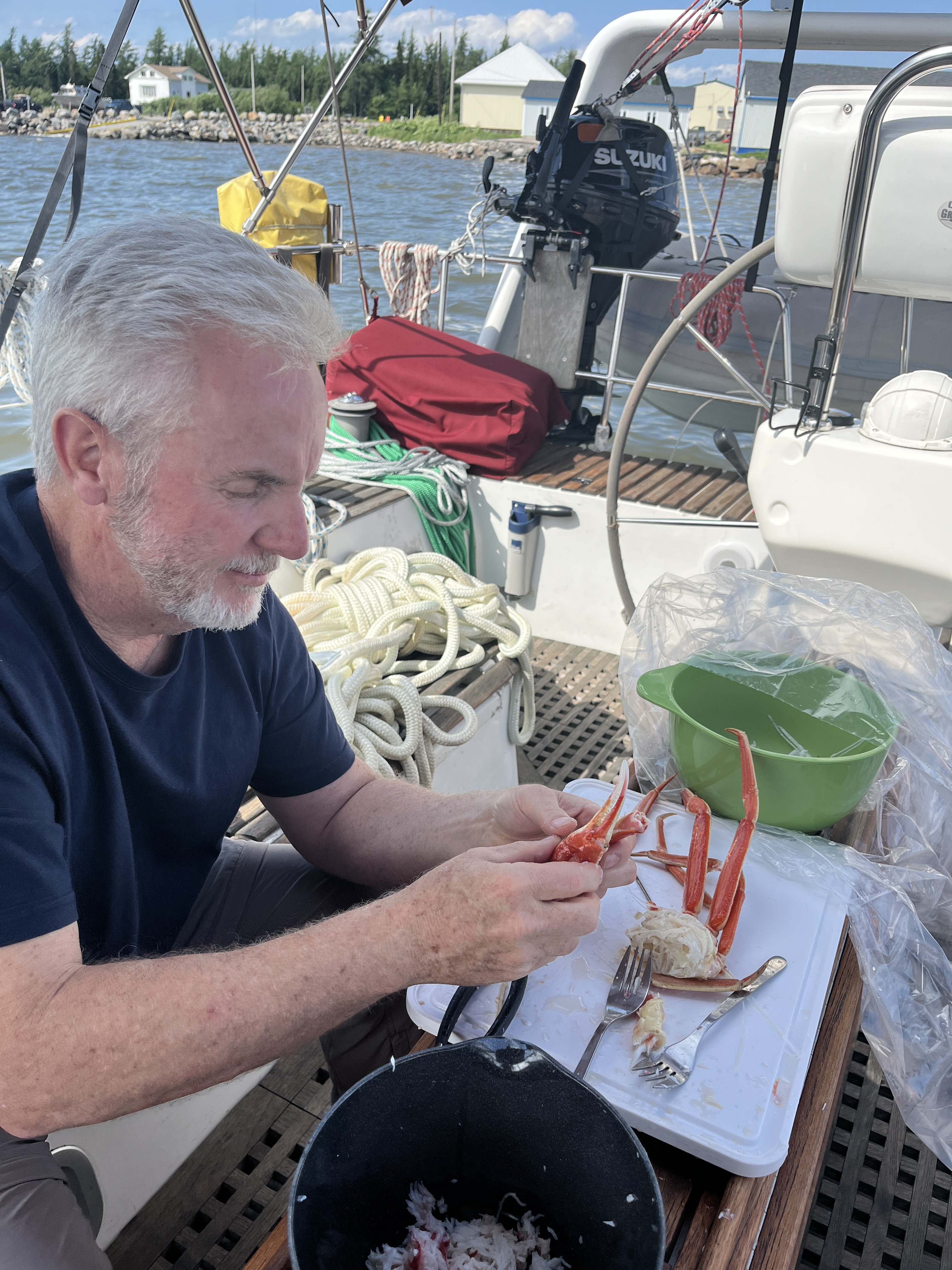
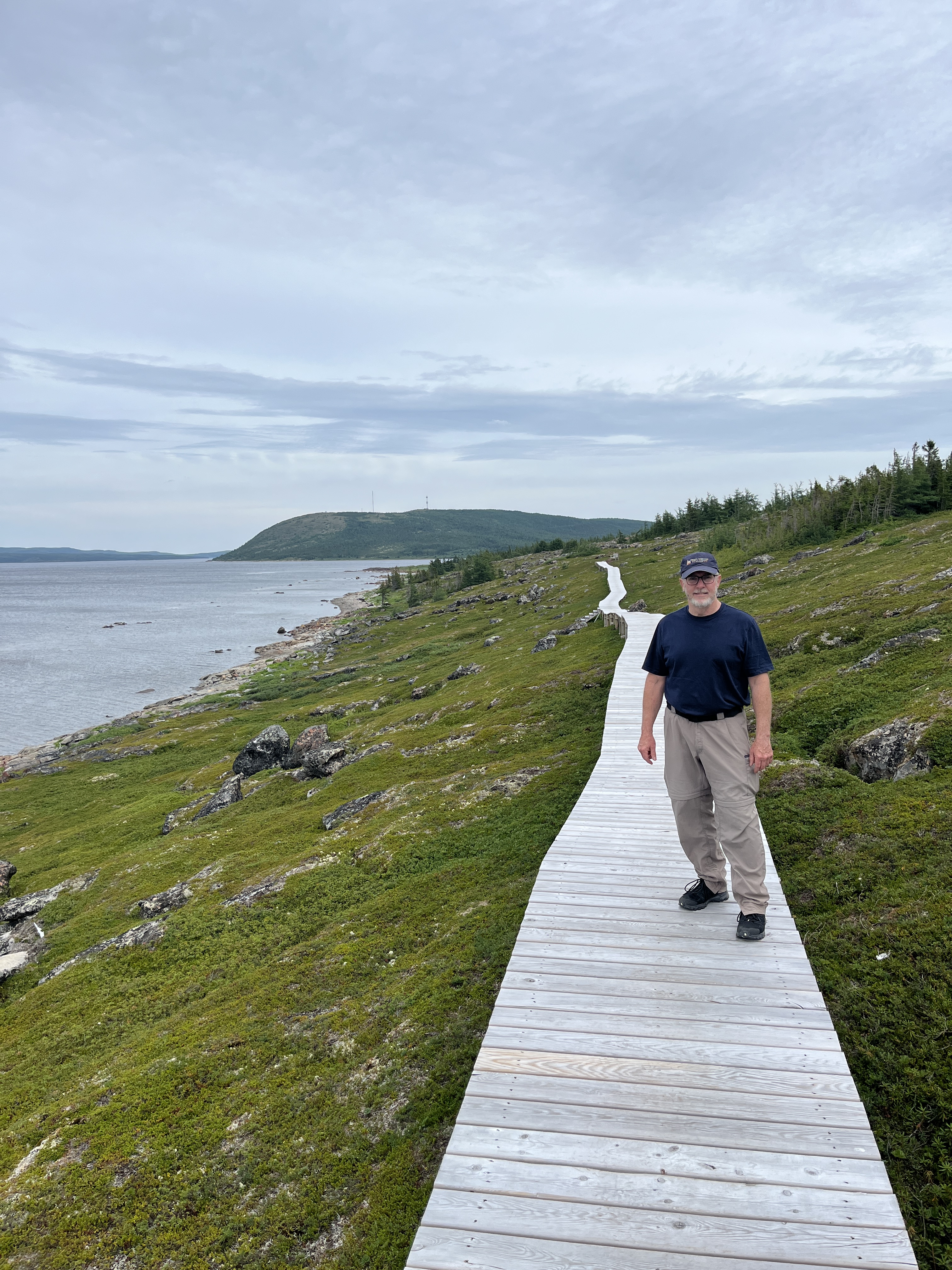
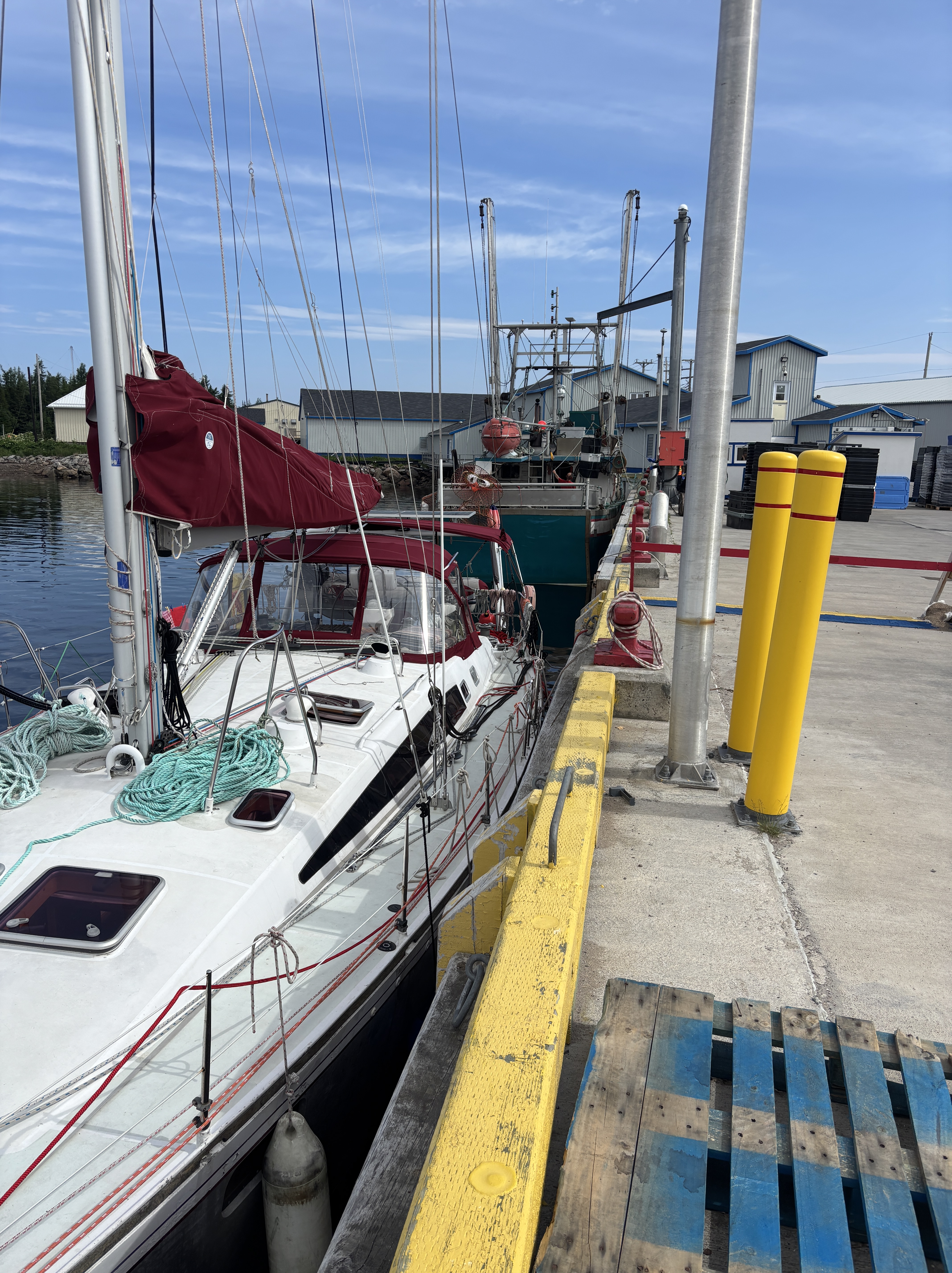
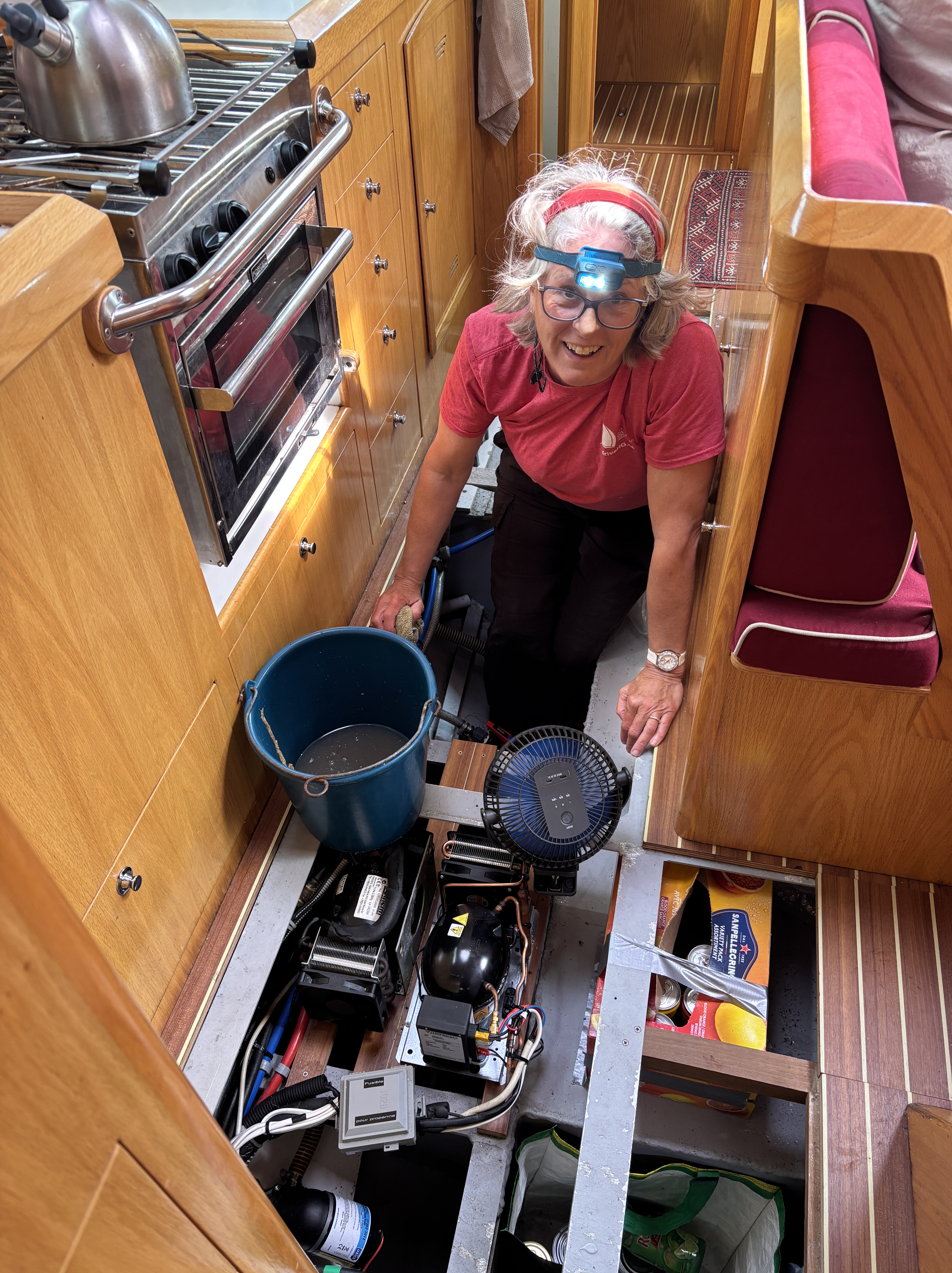
The winds did build on Thursday as forecasted and we doubled our lines to the wharf, had all fenders out and watched the wind move SSE, S to SSW and go from “verywindy” to “awholelottawind” (guessing to 35+ knots), pinning us against the dock all night… squeak of fenders, pounding of waves on the hull, rocking, spring lines groaning against the bollards and howling winds through the rigging. Wished we had our wind instruments to know just how gale force they were. Another night’s sleep lost (Ali more than Steve as he snored away the night). Ah well…
July 24th
Come morning, we were still pinned to the wharf, so we waited in the hope that the forecast for the winds to abate proved correct. Three days in Cartwright was enough, time to move on, despite feeling like crap.
By 11am the wind had eased enough that departure was a possibility, so the inelegant use of a stern springline and generous amounts of bowthruster were enough for us to squeak off the dock without shearing our fenders. We had an audience of fish plant and crab boat workers watch us depart- we were the first sailboat of the season into Cartwright. Working with the still-howling winds and incoming tide we motored through the shallow channel north of Cartwright. Once clear, we had the option of finding an anchorage close (12nm) or seeing if the wind was in our favour to sail north about 50nm. Winds continued very strong and we know Tikaani is capable of good speed in these conditions, so a quick mental calculation suggested that we could make our targeted northern landfall before sunset (9:10pm). We hoisted the main with 2 reefs, put out a sliver of Genoa and had a sporty ride across Groswater Bay averaging over 7knots. Close to perfect sailing. The wind was coming off the shore so the temperature stayed in the low teens and the sky was mostly clear.
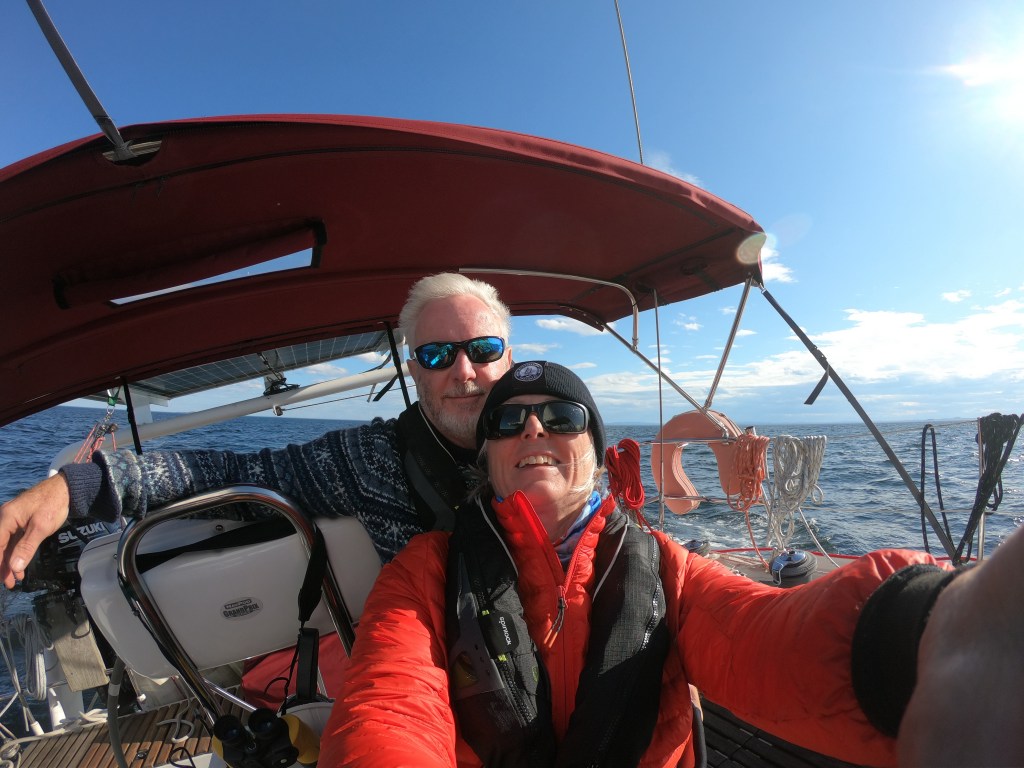
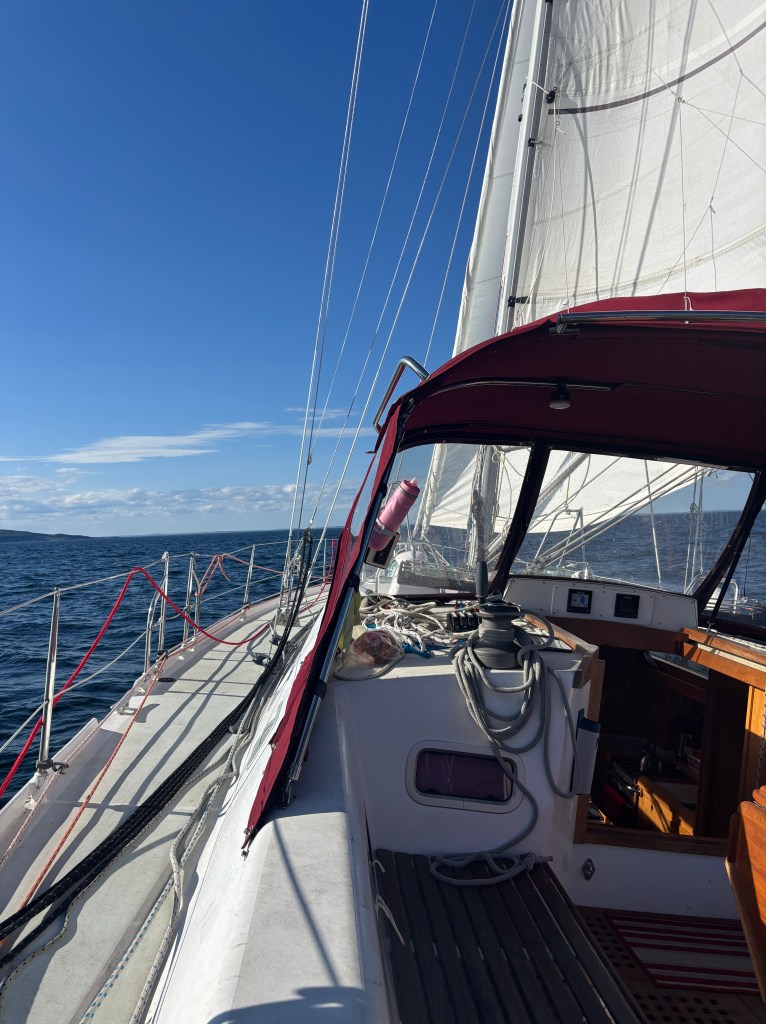
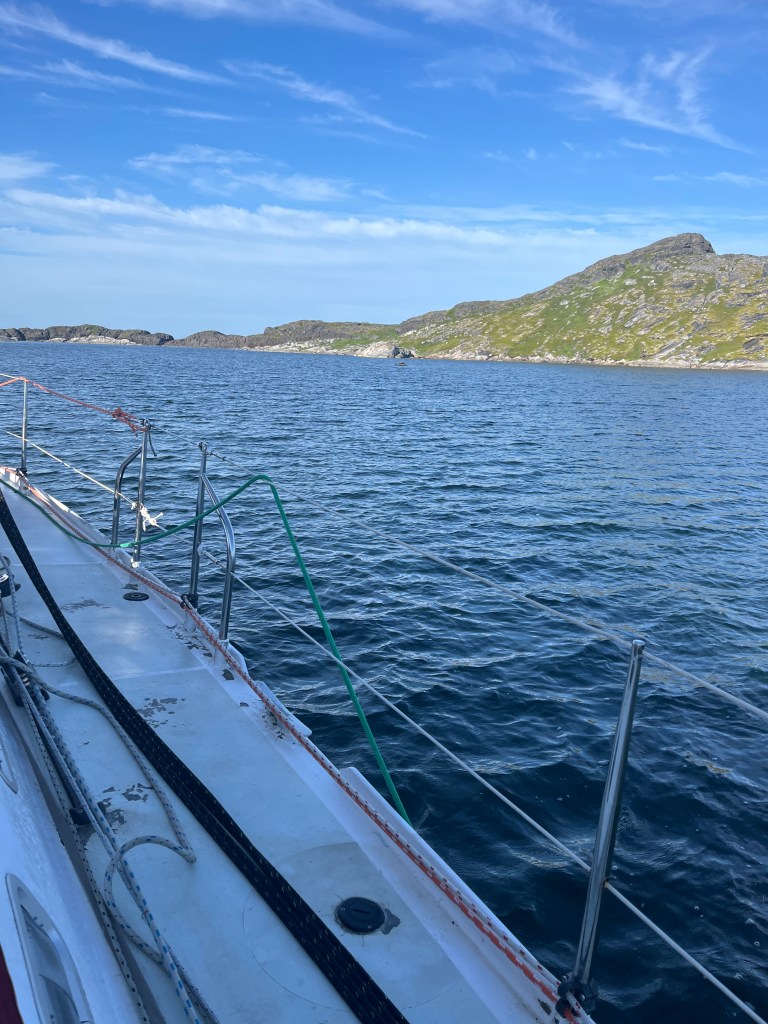
Our projected ETA was 7pm, so we made dinner while underway so it would be ready once we had the boat secured. Approaching Mundy Island there were lots of birds and Puffins too! The tundra is low, no trees, gigantic rock. Edwards Harbour is written in the CCA guide with the last visitor update 2015 and a recommendation “not to be missed”. It is a shallow and rocky bay so up went the keel to reduce our draught. The bay is magnificently sheltered, so once the anchor was set, we bobbed calmly with no wind noise screaming through the rigging. It was a very quiet night (Yippee!).
July 25th – We are happily resting in a very protected, smaller bay and awoke to see a seal sunning on the exposed rock (low tide) 100 ft away.
More photos we wanted to share:


Leave a comment